Translate

Thursday, 20 October 2011

Various stories about how Al Qathafi lived his last moments have emerged


An image captured off a cellular phone camera showing Muammar Al Qathafi during his last moments

Various stories about how Al Qathafi lived his last moments have emerged with the most plausible being that the got out of a hole near a road not far from the city of Sirte only to find himself face-to-face with the same Libyan rebels whom he once called rats.

Al Qathafi seems to have been wounded in a hole before he was captured by the rebels. Video shots aired by Al Soumoud TVchannel ishow Al Qathafi held by two rebels, one on each side of him as they helped him walk for a few steps. He had a bloodied face. He was then carried by fightes and placed over the front body of a yellow pick-up truck.

Al Qathafi looked disoriented as blood covered most of his face. When he was laid down on the car a rebel seemed to put his hand on his seemingly wounded abdomen.

According to Ibrahim Mahjoub, one of the rebels who played a part in the last moments of Al Qathafi's life, the former Libyan leader escaped to a farm and hid under a rain water hole under a road bridge. “He was already wounded,” Mahjoub said.

Mahjoub went on to say: “We were above that small bridge when one of Al Qathafi troops carrying a green flag got out of the hole and said 'my master is inside'”. Moments later Al Qathafi himself got out of the hole saying, “what is going on?” 

Mahjoub continued to say: “We held Al Qathafi by the hand. He was holding a gun in his hand, a small black bag and also a number of mascots.”

Al Qathafi tried to escape out of Sirte towards the east on Wednesday night but his convoy faced heavy fire from the rebels and was forced to retreat to the city. He tried again to escape Thursday morning but his convoy was surrounded and bombed.

There is a possibility that after his convoy came under fire Al Qathafi was injured he ran away for cover under the road only to be captured by the rebels and die as a result of the wounds he was carrying. 

Qaddafi Is Dead, Libyan Officials Say


Col. Muammar el-Qaddafi, the former Libyan strongman who fled into hiding after rebels toppled his regime two months ago in the Arab Spring’s most tumultuous uprising, was killed Thursday as fighters battling the vestiges of his loyalist forces wrested control of his hometown of Surt, the interim government announced. Multimedia Slide Show Muammar el-Qaddafi: 42 Years as the Face of Libya Photographs Battle for Libya Interactive Feature Timeline: Col. Muammar el-Qaddafi Related Battle for a Holdout City Stalls Healing in Libya (October 19, 2011) Times Topic: Libya — Revolution (2011) Related in Opinion  Nicholas D. Kristof, a Columnist for The New York Times, on the Implications of Muammar el-Qaddafi's Death in Libya and Beyond on The Takeaway Radio Program Connect With Us on Twitter Follow @nytimesworld for international breaking news and headlines. The New York Times More Photos » Al Jazeera television showed what it said was Colonel Qaddafi’s corpse as jubilant fighters in Surt fired automatic weapons in the air, punctuating an emphatic and violent ending to his four decades as a ruthless and bombastic autocrat who basked in his reputation as the self-styled king of kings of Africa. Libyans rejoiced as news of his death spread. Car horns blared in Tripoli as residents poured into the streets to celebrate. Mahmoud Shammam, the chief spokesman of the Transitional National Council, the interim government that replaced Colonel Qaddafi’s regime after he fled Tripoli in late August, confirmed that Colonel Qaddafi was killed, though he did not provide other details. "A new Libya is born today," he said.  "This is the day of real liberation. We were serious about giving him a fair trial.  It seems God has some other wish."   Abdul Hakim Belhaj, the leader of the Tripoli military council, said on Al Jazeera that anti-Qaddafi forces had Colonel Qaddafi’s body. It was not clear precisely how he died. Mohamed Benrasali, a member of the national council’s Tripoli Stabilization Committee, said fighters from Misurata who were deployed in Surt told him that Colonel Qaddafi was captured alive in a car leaving Surt.  He was badly injured, with wounds in his head and both legs, Mr. Benrasali said, and died soon after.   . Colonel Qaddafi had defied repeated attempts to corner and capture him, taunting his enemies with audio broadcasts denouncing the rebel forces that felled him as stooges of NATO, which conducted a bombing campaign against his military during the uprising under the auspices of a Security Council mandate to protect Libyan civilians. Libya’s interim leaders had said they believed that some Qaddafi family members including the colonel himself and some of his sons had been hiding in Surt or in Bani Walid, another loyalist bastion that the anti-Qaddafi forces captured earlier this week. There was no immediate comment on the news of his death from American officials. . Victoria Nuland, the State Department spokeswoman, traveling with Secretary of State Hillary Rodham Clinton in Afghanistan, said the department was aware of the reports “on the capture or killing of Muammar Qaddafi.” There was also no immediate comment from Mustafa Abdel-Jalil, the interim government’s top official. But he had said that the death or capture of Colonel Qaddafi would allow him to declare the country liberated and in control of its borders, and to start a process that would lead to a general election for a national council within eight months. Libyan fighters said earlier on Thursday that they had routed the last remaining forces loyal to Colonel Qaddafi from Surt, ending weeks of fierce fighting in that Mediterranean enclave east of Tripoli. A military spokesman for the interim government, Abdel Rahman Busin, said, “Surt is fully liberated.” The battle for Surt was supposed to have been a postscript to the Libyan conflict, but for weeks soldiers loyal to Colonel Qaddafi, fiercely defended the city, first weathering NATO airstrikes and then repeated assaults by anti-Qaddafi fighters. Former rebel leaders were caught off guard by the depth of the divisions in western Libya, where the colonel’s policy of playing favorites and stoking rivalries has resulted in a series of violent confrontations. Surt emerged as the stage for one of the war’s bloodiest fights, killing and injuring scores on both sides, decimating the city and leading to fears that the weak transitional leaders would not be able to unify the country. The battle turned nearly two weeks ago, when the anti-Qaddafi fighters laid siege to an enormous convention center that the pro-Qaddafi troops had used as a base. The interim leaders had claimed that the ongoing fighting had prevented them from focusing on other pressing concerns, including the proliferation of armed militias that answered to no central authority.

Libya: 'Gaddafi dies from wounds' suffered in Sirte capture


National Transitional Council official Abdel Majid Mlegta said that Gaddafi was captured and wounded in both legs at dawn on Thursday as he tried to flee in a convoy which Nato warplanes attacked. Gaddafi was shot in both legs and "also hit in his head", the official said. "There was a lot of firing against his group and he died." There was no independent confirmation of his remarks. In the early hours of the morning, at least five cars carrying loyalist fighters attempted to escape the city. Libyan rebels then moved into the city's Number Two residential neighbourhood, which was the last pocket of pro-Gaddafi resistance left in the war-torn country. "Sirte has been liberated. There are no Gaddafi forces any more," said Col Yunus Al Abdali, head of operations in the eastern half of the city. "We are now chasing his fighters who are trying to run away." However, there were reports that Gaddafi loyalists had ditched their military uniforms and were firing indiscriminately at civilians. The final assault on the remaining pro-Gaddafi positions began around 8am (7am GMT) on Thursday and was over after about 90 minutes. Civilians, whose city has been under siege since Gaddafi was removed from power at the end of August, were making their way to the centre to celebrate. The Telegraph, witnessing scenes in the centre of the city said there were scenes of relief, jubilation and intense celebratory gunfire among National Transitional Council (NTC) forces. The new national flag was raised above a large utilities building in the Mediterranean city, which had been under siege for nearly two months. A rebel commander confirmed that loyalist fighters in the city had been rounded up. "This is the last day of the fight," Lieutenant Colonel Hussein Abdel Salam of the Misurata Brigade told AFP. The fate of the city has become entwined with the immediate political future of Libya after the National Transitional Council said a full interim government could not be named until Sirte had fallen.

Gardai in Spain for 'Fat' Freddie handover deal


DUBLIN detectives have travelled to Spain to negotiate the handover of gangster 'Fat' Freddie Thompson. Sources say that gardai are spending a number of days with their Spanish counterparts examining evidence against Thompson. "This is standard procedure in a case like this," a source said. Thompson is due to appear before the High Court today where he is expected to apply for bail after being remanded in custody on Friday when he was arrested on a European Arrest Warrant. laundering Spanish authorities want to extradite him to Spain and they allege that Thompson operated as a bodyguard and chauffeur for the Christy Kinahan drugs organisation, which was targeted in a massive international police operation in May, 2010, known as Operation Shovel. Spanish authorities say that the Kinahan organisation is heavily involved in gun crime, drug trafficking and money laundering through a complex network of companies. Sources have revealed that in the weeks before his arrest, Thompson had fallen out of favour with the Kinahan mob -- organisation who his gang has been sourcing drugs from for over a decade. A European Arrest Warrant has also been issued for Thompson's close pal Gary Hutch (30) but gardai have not been able to find him. The Herald has previously revealed that Thompson's arrest warrant contains explosive details about a phone call tapped by Spanish police in December, 2009, between 'Fat' Freddie and Hutch in which the two criminals discuss firearms. The warrant also alleged that 'Fat' Freddie and Hutch travelled together to Portugal in November, 2009 and Amsterdam in May, 2010, to organise drug shipments. The warrant also states that Hutch and Thompson lived together in Spain and were "right-hand men" of Daniel Kinahan -- the son of Ireland's richest drugs trafficker Christy Kinahan. Also mentioned on the warrant is Ross Browning (27) from north inner city Dublin who is alleged to have collected a major Irish criminal from Malaga Airport in May, 2010, in a car which was also regularly used by the notorious criminal Hutch. violence Browning was one of around 30 people arrested by police investigating Kinahan's drug organisation last year. He was released without charge after being questioned for a number of days by Spanish authorities. Since being sent to Cloverhill Prison on Friday, Thompson has been placed in the protection unit in the jail because of fears that he may become a victim of a feud related attack or that he may orchestrate violence within the prison. It is understood he has had no visitors in jail.

Wednesday, 19 October 2011

Spanish town rushes to wed gays before election


Spanish town is offering gay couples fast-track marriages before a likely November election win by the conservative Popular Party, which opposes same-sex marriage. The mayor of the small southwestern town of Jun, Jose Antonio Rodriguez, said he offered the service across Spain after hearing from gay couples fearing a change in the law after the November 20 vote. “People are very afraid, they are starting to realise that there could be a real change and they will lose a hard-fought right,” the Socialist mayor told AFP. “I felt it was important to reassure people and find a way so that people who want to get married could do so,” he said. Rodriguez said the town had received 52 requests from same-sex couples wanting to be married in the past week after he announced on Twitter he would offer speedy gay marriages before the general election. The town of just over 4,000 residents carried out just 11 same-sex marriages during all of 2010. The wedding applications are handled entirely online in about five days, complete with marriage certificate delivered by e-mail. The mayor said he had made the town’s park available for wedding ceremonies but the vast majority of couples opt for the electronic marriage and would not need to set foot in Jun. Under Socialist Prime Minister Jose Luis Rodriguez Zapatero, Spain has been on the vanguard of Europe in terms of gay rights. In 2005 — a year after Zapatero was first elected — Spain passed a law to allow same-sex marriages, making it only the third member of the European Union after Belgium and the Netherlands to do so. The law, part of the ruling Socialists’ aggressive agenda for social reform, also lets gay couples adopt children and inherit each other’s property. Since then more than 20,000 gay couples have tied the knot. The conservative Popular Party, which is riding high in the polls, has appealed the gay marriage law to Spain’s Constitutional Court. Popular Party leader Mariano Rajoy has pledged to reform the same-sex marriage law if elected but as the general election has neared he has stressed that any legislative action will come only after the court issues its ruling. Polls show two-thirds of Spaniards back same-sex marriage, one of the highest levels of support in Europe.

Choose your petrol station carefully in Malaga Province


UP to €4.50 can be saved be choosing the cheapest petrol station to fill up. The average price per litre for unleaded petrol in Malaga Province is now up to €1.34, 13 per cent more than the same time last year, according to the Ministry of Industry, Tourism and Commerce and the highest in the whole of Spain. Diesel is €1.29 on average, 16 per cent more than October 2010. The cheapest place to fill up with 95 octane is Distreax-22, Velez-Malaga, at €1.29 per litre. The most expensive place to fill up with 95 octane is E.S. El Torcal, Villanueva de la Concepcion (Malaga), at €1.38 per litre. The cheapest place to fill up with diesel is Galp, Antequera, at €1.24 per litre. The most expensive place to fill up with diesel is Cepsa, Manilva at €1.31 per litre.

Tuesday, 18 October 2011

identified a suspect in the slaying of a high-ranking member of the Hells Angels who was shot and killed at a funeral


identified a suspect in the slaying of a high-ranking member of the Hells Angels who was shot and killed at a funeral for another member in Northern California. San Jose police say Steven Ruiz, also a member of the motorcycle gang, shot and killed 52-year-old Steve Tausan on Saturday during a fight at the funeral for Jeffrey "Jethro" Pettigrew. About 3,000 people attended the ceremony at Oak Hill Memorial Park. On Tuesday, police said Ruiz was fighting with a member of the gang when he was knocked to the ground. Tausan apparently became involved and Ruiz drew a handgun and shot Tausan. Ruiz is now missing. Investigators say they dug up Pettigrew's grave to see if Ruiz may have been killed and buried there, but didn't find anything.

Jury hands down conviction in Hells Angels motorcycle theft


A man associated with the Hells Angels motorcycle club was found guilty Monday of vehicle theft, Ventura County prosecutors said. Aaron McIntosh, 39, of Ventura stole the motorcycle of a former Hells Angels member from the backyard of his home, authorities said. He committed the theft on behalf of the Hells Angels to punish the former member, authorities said. McIntosh also was convicted of a count of committing a criminal felony while participating in a criminal street gang, authorities said. McIntosh faces a maximum sentence of 13 years and eight months in prison. A sentencing date has yet to be set.

Authorities Dig up Hells Angels Member's Grave


Authorities who feared quick justice among bikers dug up the grave of a Hells Angels member to look for the body of a Northern California man suspected of killing another gang member during a shootout at a weekend funeral, a police spokesman said Tuesday. San Jose police have an arrest warrant for Steven Ruiz, a member of the Hells Angels' Santa Cruz chapter. He's suspected of fatally shooting Steve Tausan after a fight broke out at Saturday's funeral for Jeffrey "Jethro" Pettigrew, who had been the president of the gang's San Jose chapter. Ruiz and Tausan disappeared from the Oak Hill Memorial Park cemetery shortly after the Saturday afternoon shooting, which sent thousands of mourners fleeing in panic AP San Jose Police Chief Chris Moore, right, and... View Full Caption Tausan was taken by a private vehicle to a nearby hospital, where he was pronounced dead. Witnesses saw Ruiz bundled into a car and driven away from the cemetery, but police haven't been able to locate him and his Harley Davidson motorcycle was left behind hours after the last mourner left the cemetery, San Jose police spokesman Jose Garcia said. Police obtained a warrant to dig up Pettigrew's grave in search of Ruiz's body and other evidence, Garcia said. A backhoe was used to remove a large cement fixture over the grave and the soil above the coffin was removed, he said. When nothing was found, the grave was refilled and the cement slab affixed over the site. "The grave was not desecrated," Garcia said. Police felt it necessary to search the grave because Hells Angels members, relatives and others poured dirt over the casket rather than the cemetery staff, which is the usual custom, Garcia said. The investigation was hindered even more by the scrubbing of the crime scene of blood. In addition, no bullet casings were found. "The crime scene was washed down with water," Garcia said. Authorities named Ruiz a suspect on Tuesday and said they would continue searching for him. Pettigrew was shot and killed last month during a brawl with a rival biker gang at a Nevada casino.

¡Ole! Spain drives legality into mobile services with Sybase 365


Spain was one of the first countries to start to lay down laws relating to old non-registered pay-as-you-go SIM cards for anti-terrorism reasons i.e. you MUST tell the authorities your name and address and get a new SIM if you had one of the old anonymous ones. Following on from this "mobile legality" theme, news this week bubbles of Sybase subsidiary company Sybase 365 working with Spanish mobile operator Yoigo. The two firms have joined forces to offer registered SMS, a new service allowing companies to send customers confirmation text messages with the same legal standing as registered mail. According to Sybase, "Officially certified by the Spanish Real Casa de la Moneda (The Royal Mint of Spain) the Sybase 365 and Yoigo service recognises an SMS confirmation as legal proof of delivery of important documents and information. These certificates can then be used as evidence in judicial proceedings in Spain for enterprises wishing to demonstrate correspondence with their customers. This will enable companies and their customers to resolve disputes in a timely manner, avoiding the cost of court proceedings." With registered SMS, financial institutions, utility companies and enterprises will be able to use SMS where previously they would have used registered mail. Developers working to build in legally approved services into mobile (or desktop for that matter) applications should perhaps take note of Sybase 365's suggestion that an SMS provides a number of advantages over registered mail including five times better response rate over traditional mail and is read 288 times faster than email. "No other communication medium has the ability to reach more people than SMS, said Howard Stevens, senior vice president, global telco and international operations, Sybase 365. "Consumer acceptance and enterprise adoption of the mobile channel is fuelling the growth in volume, availability and sophistication of mobile services and the registered SMS services we're launching confirms this trend."

Monday, 17 October 2011

MS-13, shorthand for "Mara Salvatrucha," is one of the world's most lethal gangs, with a power and reach that exceeds that of some national governments

Mara salvatrucha

MS-13, shorthand for "Mara Salvatrucha," is one of the world's most lethal gangs, with a power and reach that exceeds that of some national governments. It has ravaged the tiny Central American country of El Salvador, and its influence extends into neighboring Honduras and elsewhere.

But MS-13 isn't a homegrown Salvadoran phenomenon. It's an export from Los Angeles, where many gang members were initiated as adolescents and young adults, before being deported back to El Salvador and taking their violent methods with them. Today, as depicted in the new documentary "Gang Warfare USA," airing at 8 Monday night on the National Geographic Channel, MS-13 members in El Salvador work with their U.S. counterparts to export violence to cities as remote from L.A. as Greensboro, N.C.

Marc Shaffer, the film's director, producer and writer, and his crew detail the disturbing story of how a restaurant murder in Greensboro eventually led investigators to L.A. and El Salvador. Along the way, they uncover how Uncle Sam's deportation of MS-13 members to El Salvador ironically has been making the gang even stronger and more globalized than before.

In interviews with current and former gang members, U.S. Immigration and Customs Enforcement officials, attorneys and others, the documentary exposes that many gang members deported to El Salvador, where economic prospects are bleak, soon turn right around and cross back into the United States.

Meanwhile, the gang's presence in El Salvador continues to undermine the rule of law in that war-torn country: El Salvador, with a population of only 6 million, has a murder rate 10 times that of the United States, and officials estimate that 70 percent of those murders are gang-related. As one assistant U.S. attorney tells the filmmakers, "We set up the conditions by which MS-13 flourished."

Celebrities and millionaires living on one of Britain’s most exclusive estates have become the targets of a crime wave.

Celebrities and millionaires living on one of Britain’s most exclusive estates have become the targets of a crime wave.

A diplomat’s wife and son became the latest victims after they were tied up and held at gunpoint during a £100,000 robbery.

St George’s Hill in Surrey has been dubbed the British ‘Beverly Hills’ and is home to Russian oil tycoons, hedge fund managers and City financiers.

Exclusive: The St George's Hill estate in Surrey has been hit by a crime wave in recent months. It lists oil tycoons and hedge fund managers among its residents

Exclusive: The St George's Hill estate in Surrey has been hit by a crime wave in recent months. It lists oil tycoons and hedge fund managers among its residents

Bollywood actress Shilpa Shetty and Chelsea footballer Didier Drogba are also residents.

The estate is hidden behind security gates and guarded around the clock by security guards and CCTV cameras.

But that has failed to protect the residents from falling foul of a string of crimes since April.

Police have warned them to be on their guard after the latest incident last month was a gunpoint £100,000 robbery in which a diplomat’s wife and son were tied up.

One resident said homeowners, who paid up to £10million for the privilege, are ‘living in fear’ of becoming the next victim.

The neighbourhood, a favourite with Russian oil tycoons, hedge fund traders and City financiers, has been dubbed the British ‘Beverley Hills’.

Among the high-profile names to own a home there are Dragons’ Den star Theo Paphitis, Bollywood actress Shilpa Shetty and Chelsea footballer Didier Drogba.

Other include Scottish TV actress Hannah Gordon, former Chelsea player Jimmy Floyd Hasselbaink and the BSkyB chief executive Jeremy Darroch.

While former residents on the 420-home estate include Ringo Starr, Kate Winslet, Cliff Richard, Jenson Button and Sir Elton John.

Surrey Police admitted the tranquil Weybridge neighbourhood, known as ‘The Hill’ to locals, has been hit by a string of crimes since April.

Celebrity residents: Shilpa Shetty
Chelsea's Didier Drogba

Celebrity residents: Bollywood star Shilpa Shetty and Chelsea striker Didier Drogba are among the people who live in St George's Hill, Surrey

They included two violent robberies, a burglary, two thefts, the theft of a car, vandalism and a violent attack.

Detectives are still hunting the masked gunman behind the terrifying robbery where the victims were tied up and threatened with a sawn-off shotgun.

The woman, aged in her 30s, and her teenage son escaped unhurt as he made off with cash and jewellery worth £100,000.

Police suspect their attacker may have had an accomplice in a car outside but the pair managed to dodge security on the estate.

One local, who did not want to be named, said all householders had been warned about the recent crimes and been told to ‘be vigilant’.

He said: ‘There has been a lot of talk about the crime rate in the past six months.

‘Although it might not seem particularly high compared to most of the country, the simple fact is that people pay a lot of money to live here and do not expect to be living in fear.

‘There are private security guards, CCTV cameras, barriers and all sorts, so this kind of thing is very out of the ordinary for people who live here.

‘We have been told to be vigilant and to report any suspicious behaviour to the police and to the security team here.’

Elmbridge councillor Peter Harman said: ‘They’ve got their own security on the estate and they have cameras that monitor traffic going in and out, and all the cars are recorded, so it should be easy to trace people.’

The residents’ association boasts it is a ‘unique location’ for successful high achievers looking for a ‘secure and private location.’

Each house is required to have ‘at least’ one acre of land and boundaries cannot be marked by fences or walls, only hedges and bushes.

The 964-acre estate boasts its own golf club and 15 tennis courts, four squash courts, state-of-the-art gym, 20m swimming pool and sauna, bar and restaurants and its own beauty spa.

According to estate agents Savills, the the area is ‘internationally renowned as one of the most sought-after private estates in England.’

But it is not the first time the estate has had problems with unwanted intruders and people ignoring the law.

In May, peace at the gated community was punctured when squatters moved into an empty property 200 yards from the members-only tennis club that forms its social hub.

Residents were sent a letter saying those responsible were ‘known to police’ and they should be on their guard.

But the unwelcome neighbours managed to stay for several weeks at the £3million empty property which was at the centre of a long-running legal dispute.

A Surrey Police spokesman confirmed the crimes took and said officers continue to appeal for witnesses over the armed robbery.

A spokesman for St George’s Hill Residents’ Association declined to comment.


Mexico opposition may work with criminals


Mexican President Felipe Calderon has said politicians in the main opposition party may consider deals with criminals, opening an inflammatory new front in the nation's presidential election campaign. Calderon's blunt remarks about the centrist Institutional Revolutionary Party (PRI), which is favored to win the July 1, 2012 election, are unusual in a country where the president is expected to stay largely aloof from party politics. Centering on the policy that has dominated his presidency -- an aggressive army-led crackdown on drug cartels -- his comments risk polarizing opinion on how to restore stability to Mexico, where the drug war has killed 44,000 in five years. Leading members of Calderon's conservative National Action Party (PAN), other PRI opponents and political analysts have accused the once-dominant party of making secret deals with drug cartels in the past to keep the peace in Mexico. In a weekend New York Times interview published a day after he said a state governed by the PRI had been left in the hands of a drug gang, Calderon was asked whether the opposition party might pursue a corrupt relationship with organized crime. "There are many in the PRI who think the deals of the past would work now. I don't see what deal could be done, but that is the mentality many of them have," said Calderon, whom the law prevents from seeking a second six-year term. Calderon's office later issued a statement saying the newspaper had expressly noted when posing the question that the PRI had a reputation for making deals with organized crime. His office underlined that the president recognized many in the PRI did not favor this approach and supported his policy. Analysts say Calderon is bitterly opposed to the PRI, which dominated Mexico for seven decades until PAN won the presidency in 2000 under its candidate Vicente Fox. The tide of drug war killings has eroded support for the PAN, and the PRI's main hopeful, the telegenic former governor of the State of Mexico, Enrique Pena Nieto, has around twice the support of his nearest rival. NAMING NAMES The PRI has attacked Calderon for the spiraling death toll, and analysts said the president's remarks were tailored for the election, putting in jeopardy any hope of passing many pending reforms that have been stalled in Congress. "This is really serious," Javier Oliva, a political scientist at the National Autonomous University of Mexico (UNAM), said of Calderon's comments about the PRI. "The president has an obligation to prove this now. To name names." "The president is regressing into a negative stance of being president of the PAN, and not president of Mexico." The Times noted that Calderon "looked disgusted at the mere mention of the PRI" during the interview. The statement issued by his office said Calderon mentioned the ex-PRI governor of Nuevo Leon state, Socrates Rizzo, as someone who had pointed to the existence of such pacts. Rizzo's comments, which were reported early this year, were rejected by leading PRI figures at the time. The PRI's national chairman, Humberto Moreira, told El Universal's Sunday newspaper his party did not want to make deals with organized crime and that Calderon was trying to exploit the issue of public security for political ends.

Mexico’s military says soldiers freed 61 men being held captive by the Zetas drug cartel for use as forced labor


Mexico’s military says soldiers freed 61 men being held captive by the Zetas drug cartel for use as forced labor. The army says the men were found guarded by three Zetas kidnappers in a safe house in the border city of Piedras Negras on Saturday. Soldiers made the discovery during a security sweep in the area that also turned up an abandoned truck filled with 6 tons of marijuana. Loading... Comments Weigh InCorrections? In a press conference Sunday, Gen. Luis Crescencio Sandoval Gonzalez said one of the captives was from Honduras and others were from various parts of Mexico. He said the three kidnappers were arrested. Piedras Negras sits across the border from Eagle Pass, Texas, in the Mexican state of Coahuila, which has been the scene of ongoing battles between drug gangs.

Four former members of the Colombian army's special forces are training members of Los Zetas


Four former members of the Colombian army's special forces are training members of Los Zetas, considered Mexico's most violent drug cartel, the Bogota daily El Tiempo reported Sunday. The retired soldiers - two captains and two sergeants - served time in Colombia for human rights violations. "The identities of the soldiers have not been released because charges have not been filed against them," El Tiempo said, adding that the U.S. Drug Enforcement Administration, Mexican police and Colombian police were tracking their movements.

You shoot a police officer, you’re going to get shot back at


A little before dawn on a sticky summer night in June, one of Texas Gov. Rick Perry’s Ranger Reconnaissance Teams was running a clandestine operation along the Rio Grande when its surveillance squad came across a Dodge Durango pickup truck loaded with bales of Mexican marijuana. Bad idea, messing with Texas. 37 Comments Weigh InCorrections? inShare Gallery  The Texas governor is seeking the 2012 GOP presidential nomination. Gallery  Mexico's ongoing drug war continues to claim lives and disrupt order in the country. More On This Story Read more on PostPolitics.com Rick Perry a hawk on Texas border security Perry and Romney dominate GOP fundraising Cain defends ‘9-9-9’ tax overhaul plan View all Items in this Story The lawmen chased the truck along the river, with a Texas Department of Public Safety helicopter swooping overhead and Texas game wardens roaring down the Rio Grande in boats, state authorities said. In minutes, the traffickers had ditched the truck in the muddy water and were rafting the dope back to Mexico. Then the shooting started. Alone among his Republican rivals running for president, the Texas governor has a small army at his disposal. Over the past three years, he has deployed it along his southern flank in a secretive, military-style campaign that his supporters deem absolutely necessary and successful and that his critics call an overzealous, expensive and mostly ineffective political stunt. A hawk when it comes to Mexican cartels, Perry said in New Hampshire this month that as president he would consider sending U.S. troops into Mexico to combat drug violence there and stop it from spilling into the United States. The June incident along the Rio Grande was typical of Perry’s border security campaign: a lot of swagger, with mixed results. The initial news release said the Texas Rangers team came “under heavy fire” by members of the Gulf cartel, though officials later said it was “four to six shots.” The Texas Rangers and their multi-agency task force, which included U.S. Border Patrol agents, returned fire — big time — lighting up the Mexican riverbank with 300 rounds. “You shoot a police officer, you’re going to get shot back at,” said Steven McCraw, Perry’s homeland security chief and director of the Texas Department of Public Safety.

Frightening 'Drug Threat Assessment' for the USA and Mexico


The National Drug Intelligence Center, a branch of the U.S. Department of Justice, recently released a document entitled the "National Drug Threat Assessment 2011."  You can read the document online here.  The document paints a gloomy picture for both the U.S. and Mexico. The Assessment's Executive Summary begins: "The illicit trafficking and abuse of drugs present a challenging, dynamic threat to the United States.  Overall demand is rising, largely supplied by illicit drugs smuggled to U.S. markets by major transnational criminal organizations (TCOs).  Changing conditions continue to alter patterns in drug production, trafficking, and abuse. Traffickers are responding to government counterdrug efforts by modifying their interrelationships, altering drug production levels, and adjusting their trafficking routes and methods. Major Mexican-based TCOs continue to solidify their dominance over the wholesale illicit drug trade as they control the movement of most of the foreign-produced drug supply across the U.S. Southwest Border. "The estimated economic cost of illicit drug use to society for 2007 was more than $193 billion...." One of the contributing factors is the high demand for drugs in the United States. This high demand finances the drug cartels, allowing them to spend more and expand their operations.   According to the 2011 Assessment, that demand is growing. The document reports that "The abuse of several major illicit drugs, including heroin, marijuana, and methamphetamine, appears to be increasing, especially among the young."  Elsewhere it says that "Overall drug availability is increasing."  One exception to this tendency is cocaine - its availability and use are down.   The document states that "The Southwest Border remains the primary gateway for moving illicit drugs into the United States.  Most illicit drugs available in the United States are smuggled overland across the Southwest Border...."  The Southwest Border is comprised of the southern borders of California, Arizona, New Mexico and Texas with Mexico. Then there is the tunneling: "Despite enhanced detection efforts and better countermeasures, Mexican drug traffickers will continue to build tunnels under the Southwest Border." In the U.S., Mexican cartels have cornered the market.  The 2011 Assessment states that "Mexican-based TCOs [transnational crime organizations] dominate the supply, trafficking, and wholesale distribution of most illicit drugs in the United States."  Elsewhere, it predicts that "Major Mexican-based TCOs and their associates are solidifying their dominance of the U.S. wholesale drug trade and will maintain their reign for the foreseeable future." The Mexican cartels are active in many urban areas.  The Assessment calculates that "Mexican-based TCOs were operating in more than a thousand U.S. cities during 2009 and 2010...." And, "Mexican-based trafficking organizations control access to the U.S.-Mexico border, the primary gateway for moving the bulk of illicit drugs into the United States.  The organizations control, simultaneously use, or are competing for control of various smuggling corridors that they use to regulate drug flow across the border. The value they attach to controlling border access is demonstrated by the ferocity with which several rival TCOs are fighting over control of key corridors, or ‘plazas.'" The document says that seven major Mexican drug cartels are supplying the United States, but that "... the Sinaloa Cartel is preeminent - its members traffic all major illicit drugs of abuse, and its extensive distribution network supplies drugs to all regions of the United States." U.S.-based gangs are involved in the distribution north of the border: "The threat posed by gang involvement in drug trafficking is increasing, particularly in the Southwest Region. With gangs already the dominant retail drug suppliers in major and midsized cities, some gang members are solidifying their ties to Mexican TCOs to bolster their involvement in wholesale smuggling, internal distribution, and control of the retail trade." The Assessment reports that "Criminal gangs - that is street, prison, and outlaw motorcycle gangs - remain in control of most of the retail distribution of drugs throughout much of the United States, particularly in major and midsize cities." The document predicts that "Collaboration between U.S. gangs and Mexican-based TCOs will continue to increase, facilitating wholesale drug trafficking into and within the United States.  Most collaboration occurs in cities along the U.S.-Mexico border, although some occurs in other regions of the country. Some U.S.-based gangs in the Southwest Border region also operate in Mexico, facilitating the smuggling of illicit drugs across the border." The 2011 Assessment paints a gloomy picture of the drug trafficking situation, drug cartels, and the safety and security of both the U.S. and Mexico.

Wednesday, 12 October 2011

Iranians allegedly plotting the terrorist attack tried to hire the notorious Zeta’s drug cartel to carry it out.


 The suspects offered $1.5 million and “multi-ton” quantities of opium as payment. This case illustrates that we live in a world where borders and boundaries are increasingly irrelevant. According to the criminal complaint the Iranian suspect wanted to hire the Zetas because the cartel had access to military grade weaponry including explosives.  "I think the Zetas have the reputation of being the most ferocious and violent drug cartel in Mexico and so this Iranian agent may have thought the Zetas will do anything, that they’re cold blooded killers, and they’re capable of pulling something like this off." said Howard Campbell, author of the "Drug War Zone. The Zetas are behind some of the most brutal and brazen killings in Mexico including grenade attacks in public places, a casino fire in Monterrey that killed dozens of people and the murder of a U.S. federal agent working in San Luis Potosi. His partner was wounded. The suspect named in the criminal complaint traveled to Mexico on several occasions to work out the details of the terrorist attack.  A source says one meeting happened in Reynosa on the Texas border. In the end, he was not dealing with the violent Zetas but a drug trafficker who is paid informant for the US government.

Los Zetas is depleted, after the capture of four of its top leaders and the dismantling of about 40 cells in that organization in the state of Veracruz


 Los Zetas is depleted, after the capture of four of its top leaders and the dismantling of about 40 cells in that organization in the state of Veracruz in less than four months, officials in this port said. 

It is said most of the Zetas are hiding and are not operating, so there is clearly a drop in kidnappings, "levantones" and derecho de pizo or cuota charges in Veracruz and Boca del Rio, mainly. 

Military sources also believed that Los Zetas do not have enough people so their operations and finances are being depleted. 

But officials warn a reinforcement of assassins may come from Tabasco, Chiapas and Oaxaca. 

The dismantling of various cells of the criminal group, it was mainly due to the arrest of leaders and local police commanders who assure safety  to the Zetas. 

Sense August the Navy has arrested at least 30 members of various local corporations. 

In July, seven police officers were arrested Tuxpan by the Navy, and presumed to be involved in the death of a sailor. Among them was a second in command. 

A month later in Veracruz, the arrest of Francisco Bautista Carballo, "The Shark" and two of his accomplices, weakened the actions carried out by Los Zetas in the port and Boca del Rio in kidnapping and collecting derecho de pizo or cuotas. 

Another cell was dismantled on August 14, when the Navy arrested five members of the cartel involved in the death of four sailors in retaliation for the Navy operating in the state. 

In September, six Intermunicipal police officers from Veracruz-Boca del Rio were arrested for carrying out murders and kidnappings for Los Zetas. 

In addition, 74 members of this criminal group were also arrested, among them Karim Muñoz Castillo, the plaza boss from Tuxpan. 

At the end of the month Angel Manuel Mora, "Commander Devil," was arrested after a clash in Las Brisas, in the port of Veracruz. 

Mora served as an alleged chief hitmen in the urban area of ​​Veracruz-Boca del Rio, as well as the alleged person in charge to assure the safety of that criminal group in Ciudad Mendoza, Veracruz route. 

On Thursday, the Navy arrested 12 alleged members of the criminal organization Los Zetas, including the alleged new leader in Veracruz. 

In recent days, federal forces have killed seven suspected members of Los Zetas who have attacked military convoys. 

In the port of Veracruz, the patrols of the Army, Navy and state police are frequent. 

But the "hawks", are also in the look out. 

Iranian-American used-car salesman who believed he was hiring assassins from a Mexican drug cartel for $1.5 million.


The United States on Tuesday accused Iranian officials of plotting to murder Saudi Arabia’s ambassador to the United States in a bizarre scheme involving an Iranian-American used-car salesman who believed he was hiring assassins from a Mexican drug cartel for $1.5 million. The alleged plot also included plans to pay the cartel, Los Zetas, to bomb the Israeli Embassy in Washington and the Saudi and Israeli Embassies in Argentina, according to a law enforcement official. The plotters also discussed a side deal between the Quds Force, part of Iran’s Islamic Revolutionary Guards Corps, and Los Zetas to funnel tons of opium from the Middle East to Mexico, the official said. * The plot evidently was discovered at a very early stage. One wonders: How? Through intercepts of phone conversations or emails? Eric Holder, widely believed to be a dead man walking in Washington as a result of Fast and Furious, was front and center at today’s news conference. Holder was a prominent critic of essentially everything the Bush administration did to discover and combat terrorist plots. It would be interesting to know whether the intelligence triumph that Holder celebrated today was yet another example of the wisdom of the Bush administration policies that Obama, Holder and their ilk endlessly demagogued before they found it expedient to adopt them. * One remembers liberal assurances, when a Republican administration was trying to keep us safe from terrorist attacks, that diverse anti-American groups could never cooperate. Democrats went so far as to claim that Shia and Sunni Muslims–who in fact work together in furtherance of terrorist plots all the time, as, to take just one example, when Iran supports Hamas–could never cooperate against America or our allies. Today, assuming the Obama administration is being truthful, we have the spectacle of Iran’s mullahcracy paying a Mexican drug cartel to carry out terrorist attacks. Do radical Muslims really care about technicalities like drug dealing when it comes time to advance their interests? Of course not! On the contrary, this plot represented an alliance of the world’s two major proponents of beheading. * Assuming that the administration’s account is correct, Iran had little doubt that a Mexican drug cartel would be able to get men and weapons across the border to carry out a terrorist attack in Washington. Presumably they were right. One wonders what it will take to get liberals to take border security seriously. If the Mexicans had blown up a D.C. restaurant and killed 100 Americans along with the Saudi ambassador, would liberals finally have started paying attention to the border? I doubt it. * One little detail has gotten lost in most reporting: The alleged plot also included plans to pay the cartel, Los Zetas, to bomb the Israeli Embassy in Washington and the Saudi and Israeli Embassies in Argentina, according to a law enforcement official.

To the School Community: Due to the great insecurity we are living, and since authorities are not giving teachers, parents, students and the community in general the sufficient security

Parents and teachers hang up a banner on the gates of a school in the Pacific resort city of Acapulco, Mexico on Monday. The banner reads in Spanish "To the School Community: Due to the great insecurity we are living, and since authorities are not giving teachers, parents, students and the community in general the sufficient security, we have decided to continue the work stoppage until security conditions are more favorable."

Bernandino Hernandez/AP

Mexican kidnapping gang's leader arrested


The suspected leader of the Los Gitanos kidnapping gang, which operates across Mexico and abducted a number of businessmen, has been arrested, Nuevo Leon state officials said Tuesday. "Aaron Bosquez Montes, alias 'El Chico,' 28, was the leader of the Los Gitanos kidnapping gang and demanded ransoms that ranged from 20 million pesos ($1.5 million) to $4 million," Nuevo Leon Gov. Rodrigo Medina said. Bosquez Montes was arrested on Oct. 3 at the Mexico City international airport, Medina said. Twelve of the 15 members of the criminal organization, which had been collecting ransom payments for three years, have now been arrested, the governor said during an appearance at the Nuevo Leon State Investigations Agency, or AEI, headquarters. The gang staged at least nine kidnappings in Nuevo Leon, which is located in northern Mexico, reaping more than 52 million pesos (nearly $3.9 million) in ransom payments. Los Gitanos would conduct a "prior study of its victims" before kidnapping them, targeting "middle and upper class" businessmen and professionals, the governor said. The blow against the gang should "help us continue building confidence" among citizens, Medina said. Photographs of Bosquez Montes traveling overseas and recorded telephone conversations were released by officials. Authorities are asking victims of Los Gitanos to contact them and report the crimes. Kidnapping has become a widespread problem in Mexico in recent years, with gangs of different levels of sophistication targeting victims from various strata of society. In October 2010, Congress approved a bill that stiffens the penalties for kidnappers from 25 to 45 years behind bars when the victims are mutilated or if the criminals are retired or active-duty police officers, and from 40 to 70 years in prison if the victims are killed.

Monday, 10 October 2011

NJ Town First to Consider Medical Marijuana


Medical marijuana could get a little closer to sprouting in the Garden State, as one licensed dispensary heads to the zoning board in the town of Maple Shade, NJ. Authorities in March licensed six non-profit alternative treatment centers across the state, but they’ve largely been in a holding pattern ever since. On Wednesday, Compassionate Sciences Inc. will be the first center to seek local approval. The firm wants to convert an old furniture store into a 5,000 square foot center, with consulting rooms for patients to discuss the controlled substance, a lab to conduct research and, as spokesman Andrei Bogolubov describes it, a very secure vault for the marijuana. “There's a lot of controls, a lot of safeguards, and the state's going to do a site visit to make sure those systems are in place before they issue the permit and let us open the doors,” he said. Even if it gets a local go-ahead, Compassionate Sciences and the other approved dispensaries are still waiting for New Jersey to issue final regulations. Each center will grow and harvest its own crop of marijuana and Bogolubov estimates it will take about nine weeks to generate enough to supply customers. About 30,000 of them are expected state-wide. Governor Chris Christie, a former federal prosecutor, has said he would not have signed the bill into law. He wants to make sure the drug only gets to people who need it for pain relief from illnesses such as cancer and multiple-sclerosis. He said he is determined to avoid “abuses” that he said have plagued medical marijuana programs in Colorado and California.

The Netherlands is embarking on a crusade against its multi-billion-euro marijuana industry


The Netherlands is embarking on a crusade against its multi-billion-euro marijuana industry, with significant implications both for its economy and its famously liberal approach to life. Along with tighter control of legalized prostitution and a swing to the right in attitudes toward immigration and Islam in recent years, the clampdown is seen as further evidence of an erosion of tolerance in a country known for its liberal social policies. The push to clamp down on soft drugs has come mainly from the Christian Democrats, the junior partner in the minority government and one of the larger parties in a fragmented political landscape. "There's clearly a shift in the moral debate. It's all about the culture of control," said Dirk Korf, professor of criminology at the University of Amsterdam. Instantly recognizable from the sickly sweet, burned-leaf smell that wafts out onto the street, the Netherlands' world-renowned "coffee shops" are almost as common as supermarkets in big cities such as Amsterdam and Rotterdam and in certain border towns. Like trained sommeliers, the staff or "bud tenders" are experts on the flavors and after-effects of whatever is on the menu -- white widow, vanilla kush, or hazers like amnesia "known for its extreme, almost paranoid psychedelic high, with an unforgettable strong fruity taste and smell." Counter staff do a brisk trade in plastic sachets of loose grass, ready-rolled joints and chunks of hashish for those who want take-away. The Netherlands tolerates the sale of up to 5 grams per person per day of marijuana and hashish in the controlled environment of the coffee shops. It also tolerates the home cultivation of marijuana plants, within a limit of five plants per person, but any cultivation larger than that is illegal. Strong demand has spawned secret cannabis plantations that provide a so-called back-door supply to the coffee shops and are a headache for Dutch authorities who have to find and raid them. DRUGS TOURISTS On a typical Saturday evening, the coffee shops in central Amsterdam are packed with smokers. The clientele is middle class, the voices mostly foreign -- Italian, Spanish, French, German, English. Concerned about this influx of soft-drugs tourists, not to mention what it sees as the associated crime, nuisance and health risks, the Christian Democrat Party wants to see the country's 700 or so coffee shops shut down, but for the moment is settling for introducing restrictions on their activities. A measure expected to be passed in parliament by the end of this year will have coffee shops operate as members-only clubs, meaning that only local residents will be eligible to register for "weed passes," effectively barring foreigners from buying soft drugs. Already, some cities have introduced tighter restrictions, limiting the coffee shops' proximity to schools or relocating them to the outskirts. On October 1, coffee shops in the southeastern city of Maastricht banned all foreigners except for neighboring Germans and Belgians, as a first step toward introduction of weed passes. Crime expert Korf says there is little justification for the clampdown, with scant evidence that the Dutch public supports the change. "No serious polls have been conducted, we don't know if opinions about coffee shops have even changed," said Korf. "Before coffee shops we had street dealing, they were selling marijuana in the street and ripping off tourists. The whole drug problem is nothing compared to (what we had in) the 1980s, 1990s -- we don't have a heroin problem." The Trimbos Institute, which studies addiction and mental health, said 5 percent of Netherlands citizens smoked weed or hashish in the past year, against an EU average of 7 percent. GLOBAL CONFUSION Policymakers around the world are seeking fresh ideas on how to combat drug abuse, opening up a debate on policies on soft drugs. In June, a high-profile group of global leaders declared the "war on drugs" a failure and urged governments to consider decriminalizing drugs in order to cut consumption and weaken the power of organized crime. The Global Commission on Drug Policy -- which includes former Brazilian President Fernando Henrique Cardoso, former U.N. Secretary-General Kofi Annan, former U.S. Federal Reserve Chairman Paul Volcker and British billionaire Richard Branson -- said a decades-long strategy of outlawing drugs and jailing users while battling drug cartels had not worked. It recommended that governments experiment with the legal regulation of drugs, especially cannabis, citing the successes in countries such as the Netherlands, Portugal and Switzerland, where drug consumption had been reduced. Portugal, for instance, has gone much further than the Netherlands by decriminalizing all drugs, replacing jail time with counseling and treatment. The Christian Democrats disagree and say the Dutch policy has had a negative effect on public health and crime. "In other countries there is no tolerance. The Dutch coffee shops attract a lot of foreign drug tourists, especially in the border region, causing much nuisance," according to a statement published on the Christian Democrat Party website. The centrist party has cast doubt on the rationale for allowing coffee shops, which was to separate the soft and hard drugs markets, and said that people who smoke cannabis often turned to other drugs. It also argues the active substance in cannabis is much stronger than twenty years ago, putting it on a par with harder drugs -- a reflection of years of cultivation of new varieties by growers. A Dutch commission earlier this year found that hashish and marijuana on sale in the Netherlands contain about 18 percent of THC, the main psychoactive substance, and said a level above 15 percent put the drugs on a par with heroin or cocaine. Maxime Verhagen, a Christian Democrat who is deputy prime minister, said on October 7 the government would ban the sale of cannabis whose concentration of THC exceeds 15 percent. The Christian Democrats also want tougher regulations on the so-called cannabis plantations. In addition to illegally supplying the coffee shops, "much of the illegally cultivated cannabis in the Netherlands is exported abroad. There is an extensive network illegally created in the grip of organized crime," the party said in its statement. Dutch authorities already devote considerable resources to tracking down these large-scale plantations. The police work with the local electricity company to detect unusual consumption patterns, for example round-the-clock usage in sheds and attics, and have used tiny sniffer-helicopters which can detect the smell of pot plants wafting from ventilation shafts and chimneys, according to media reports. Rotterdam city council recently distributed "scratch and sniff cards" to households, hoping that concerned citizens would tip off the police if they recognized the smell of illegal cannabis plantations in the neighborhood. PUSHBACK AT HOME There is plenty of opposition to the crackdown. Dutch smokers do not welcome the idea of having to register for weed passes. "Many of my customers are locals, artists, writers, doctors, lawyers, professionals. They don't want their name on a register -- they don't know who could see it or use it. So they may go to other sources on the street," said Paula Baten, manager of the Siberie coffee shop in central Amsterdam. "This government is more Christian, more right-wing. They don't want drugs but they forget about the effects of alcohol." Already, there's talk of how foreigners can circumvent the new rules, for example by asking Dutch citizens to buy soft drugs on their behalf to take away, and concern that dealing in soft drugs will go onto the street. Some politicians oppose the proposals. Eberhard van der Laan, the mayor of Amsterdam, says restricting the activities of coffee shops would lead to greater health risks, nuisance and drug dealing on the streets. As mayor, he could simply choose not to enforce the weed pass regulations. "At the moment the mayor is in conference with the minister to convince him that the measures regarding coffee shops will be counterproductive for Amsterdam," the mayor's office said in a statement to Reuters. Others cite the likely economic impact. The Netherlands, like other European countries, has had to introduce austerity measures and cut spending in the wake of the credit crisis, when it pumped 40 billion euros into rescuing financial institutions. Tax revenue from the coffee shops is estimated at about 400 million euros a year. Studies by the finance ministry and academics estimated that if the Netherlands legalized the "back-door" supply, bringing it "above board," it could collect as much as an additional 400-850 million euros a year, including savings on the cost of law enforcement. Then there's the tourist revenue. In Maastricht, which gets a lot of day tourists because it is so close to the German and Belgian borders, a study commissioned by an association of coffee shop owners calculated that visitors to the city's coffee shops spent about 119 million euros a year, mostly on shopping and eating out. A study by Professor Korf of the University of Amsterdam found that tourists who visited coffee shops in central Amsterdam had similar spending habits to other tourists, and were just as likely to spend 200 euros or more on a hotel room, or splash out at smart restaurants or nightclubs. The Bulldog and Barney's -- the big names in the industry -- run coffee shop chains, and many coffee shop owners also make money from lodgings and related businesses. Hundreds of tourists attend the annual cannabis cup award for the best new strains, and the local edition of Time Out runs monthly weed reviews. Jackie Woerlee, who runs customized cannabis tours, said that among her recent tour guests were members of one of the Middle East royal families who rented a luxury apartment for several weeks and spent several thousand euros shopping at luxury stores. "Customers might easily spend 100 euros in a coffee shop, but it's not just that, it's the hotels, the eating out, renting apartments," Woerlee said. "These people spend."

Wednesday, 5 October 2011

WHOEVER shot the son of Mark Sandery broke "the paramount rule" of outlaw bikies, sources close to the gangs have warned.

Shooting at Semaphore

 Two men broke into this Semaphore house, smashed windows and shot the son of Finks club member Mark Sandery. Source: Sunday Mail (SA) 

a child, 11, was shot at this semaphore house

 A Finks member, right, who was at this Semaphore house where the son, 11, of notorious Fink Mark Sandery was shot on Friday night. Picture: Digitally enhanced imageSource: AdelaideNow 


The Advertiser  has been told the shooting of the boy, 11, goes against the core values of bikies.

"When it comes to dealing with rivals, there are no hard and fast rules except for two," a source said yesterday.

"You try not to do it in public, and the paramount rule is that you never, ever hurt the wife or the kids.

"To a lot of the guys, their children mean everything ... that's why you just don't do it."

Sandery was a member of the Finks Outlaw Motorcycle Club, but there are conflicting reports on whether he remains a member.

His son was injured when two male intruders burst into a home on Military Rd, Semaphore, on Friday night.

Drug-dealing killer: Chicago cop stopped DEA investigation of me


high-level drug trafficker admits he was involved in three killings after a Chicago Police officer scuttled a federal investigation into his illegal activities in the mid-1990s, according to a recent court filing. Saul Rodriguez, who pleaded guilty last month to federal drug conspiracy charges, was an informant for Officer Glenn Lewellen for years. But Rodriguez told authorities he and Lewellen were also longtime partners in crime. They allegedly worked together to rip off other drug dealers, splitting millions of dollars in loot. Lewellen recruited Rodriguez as a police informant in early 1996. Rodriguez’s undercover name was “Bill Pager.” From 1996 to 2001, the Chicago Police Department paid him $807,000 for information that led to seizures of drugs and cash, prosecutors said. All the while Rodriguez was making cases for the police, however, he was committing crimes. And Lewellen repeatedly stepped in to keep Rodriguez out of jail, prosecutors said. Rodriguez’s statements to authorities are included in a 188-page document containing evidence prosecutors intend to present against Lewellen and other defendants who face trial in the same case. Rodriguez has agreed to testify against them. According to the document, Lewellen in mid-1996 persuaded the U.S. Drug Enforcement Administration to stop investigating Rodriguez after 154 pounds of marijuana were seized from a secret compartment in his Buick. Lewellen told the DEA its investigation would harm ongoing Chicago Police Department cases, prosecutors said. Lewellen, who joined the police force in 1986, retired in 2002 to become a homebuilder. But he still managed to obstruct a separate DEA investigation of Rodriguez, prosecutors said. In 2006, Lewellen warned Rodriguez not to speak to a drug courier whose phone was wiretapped, Rodriguez said. At the time, the DEA was investigating Rodriguez’s ties to a cocaine wholesaler, prosecutors said. Lewellen told Rodriguez he got the information from an “agent” who previously worked in Colombia, but didn’t say what agency was involved in the investigation, according to Rodriguez. As Lewellen was allegedly protecting Rodriguez from the DEA, Rodriguez was involved in the murders of three men, prosecutors said. Rodriguez has confessed to orchestrating the slayings in 2000, 2001 and 2002. Rodriguez has also told authorities he arranged for a friend to “escape” from a prison in Mexico in 2003. He said he met with the prison warden while on vacation in Mexico and promised to pay him a $250,000 bribe in exchange for his friend’s freedom. In addition to his career as a drug dealer, Rodriguez became involved in managing boxers and developing real-estate in Chicago and Nevada, records show. The document detailing Rodriguez’s statements to federal prosecutors, filed last month, provides new details about Rodriguez’s relationship with Lewellen. For example, Rodriguez said he bought Lewellen a Ford Crown Victoria equipped with a siren. Lewellen allegedly drove the car while posing as a legitimate cop during drug rip-offs, Rodriguez said. Rodriguez has told authorities that another Chicago Police officer participated in at least one rip-off, but he believes the officer is now deceased. The prosecution’s evidentiary document also provides more information about the three murders in which Rodriguez admits to having a role. Rodriguez said he persuaded Lewellen to frame Juan Luevano with a drug case in 1999. Luevano, who was dating Rodriguez’s former girlfriend, was released from jail after posting bond in the case. Rodriguez said he then met with a high-ranking Satan Disciples gang member who was in prison. The gang leader was angry Luevano was dating his wife, Rodriguez told authorities. The gang leader asked Rodriguez to find someone to “get” Luevano. So Rodriguez said he hired a high-school pal, Manuel Uriarte, to kill Luevano. Uriarte and Andres Flores allegedly shot Luevano to death in 2000 near his home in Cicero, prosecutors said. They’re charged with murder in the same federal drug conspiracy case. Rodriguez also admitted he arranged for the 2001 murder of Michael Garcia. Rodriguez said he acted at the request of a friend who suspected Garcia had killed his brother, prosecutors said. And Rodriguez said he was involved in the 2002 murder of Miguel De La Torre. Rodriguez said he arranged the kidnapping of De La Torre to scare him into providing information about the location of cocaine and money. Rodriguez said he hired Miguel Uriate and his brother Jorge Uriate to squeeze the information from De La Torre, a drug dealer. If De La Torre refused to talk, they agreed the Uriates would kill him, Rodriguez said. Rodriguez admitted he provided Uriate brothers with an electrical cord they used to strangle De La Torre in a garage. Jorge Uriate also faces murder charges in the same case. Lewellen, who is free on $1 million bail awaiting trial, is not charged with any of the killings.

Feds indict 23 Texas Syndicate gang members


Federal authorities Tuesday announced the indictment of 23 reputed Texas Syndicate gang members and associates on charges including four murders, drug trafficking and extortion. Those charged are primarily in the Uvalde and Hondo areas, but the prison-born criminal group has members throughout the state. Their alleged crimes were committed over the past nine years, according to the indictment, which details the structure and goals the gang, which is led by officers with ranks. The indictment also delves into the gang's strict rules and penalties, including being killed, for going against the organization or disobeying orders. "The (Texas Syndicate) will not hesitate to kill anyone who interferes with the business of the gang or who commits a violation of Texas Syndicate rules. Among those charges under RICO, the acronym for Racketeering Influenced Corrupt Organization: Cristobal "Little Chris" Velasquez, 33, of Uvalde; Sotero Rodriguez Martinez "June", 41, of Uvalde; Chuco Mario "Mariachi" Martinez, 35, of Uvalde; Larry "Little Larry" Munoz, Jr.,36, of Uvalde; Brian "Tata" Esparza, 31, of Uvalde; Charles "Horse" Esparza, 32, of Uvalde; Ervey "Mad Max" Sanchez, 31, of Uvalde; Mark Anthony Vela, 35, of Hondo; Charles Olan Quintanilla, 32, of Hondo; George "Curious" Sanchez,36, of Uvalde; and, Inez "Bebito" Mata, 41, of Uvalde. Others charged in the case are not accused of violating the RICO law.

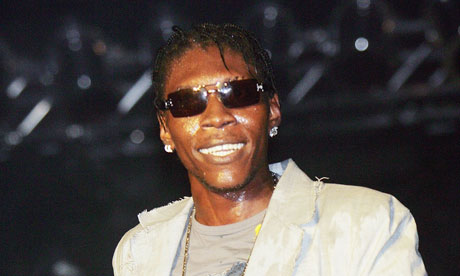
Dancehall star Vybz Kartel has been charged with the murder of Jamaican promoter Barrington Burton

Vybz Kartel
. Photograph: Scott Gries/Getty Images

Jamaican dancehall star Vybz Kartel has been charged with murder. A police statement issued in Kingston on Monday said that the 35-year-old artist was charged with murder, conspiracy to murder and illegal possession of a firearm. Investigators accuse the rapper, whose real name is Adijah Palmer, of conspiring with others to kill a 27-year-old promoter who was murdered earlier this year.

"The allegation is that on Monday, July 11, 2011, Palmer, along with other men, conspired to murder Barrington Burton o/c 'Bossie', a 27-year-old businessman/promoter of a Gregory Park address in St Catherine. Burton was murdered while he was standing with friends along Walkers Avenue in Gregory Park," the police release said. A preliminary hearing is scheduled to take place on Tuesday.

Kartel's defence attorney was reported to have said that his client was prepared to fight the charges. Kartel was initially arrested on Friday for marijuana possession.

Kartel has previously been arrested on charges including assault and illegal gun possession. Those charges were later dropped. A long-running feud with fellow artist Mavado is alleged to have fuelled mob attacks in inner-city neighbourhoods of Kingston. In December 2009, the two met government ministers in an attempt to calm the situation.

Kartel has worked on collaborations and remixes with the likes of Jay-Z, Rihanna and MIA. His international hits include Ramping Shop, Dollar Sign and Clarks. The success of the latter song last year sent sales of the British shoes soaring in Jamaica. A businessman in his own right, Kartel also has his own brands of rum and condoms as well as his owncontroversial range of skin-lightening cosmetics.

Recently, the singer also became the star of locally produced reality TV show Teacha's Pet. Officials from the telecommunications company that sponsors the show were said to be discussing the new charges levelled against Kartel last night.

Friday, 30 September 2011

Police warn they may not be able to afford Tesco's £3m riot compensation bill


In total, the retailer has asked for nearly £3m in compensation from police forces around the country, following the riots that tore through some high streets in August. It is likely that this is the biggest request from a single retailer. The company is claiming under the Riot Damages Act, a piece of Victorian legislation that allows businesses and individuals affected by riot damage to claim directly from the police, rather than their own insurer. In the immediate aftermath of the civil disturbances, the British Retail Consortium urged small retailers to put in their claims to make sure their businesses were not harmed. However, the Greater Manchester Police Authority, which has been hit with 280 claims totalling £4.4m, has criticised Tesco for using the Act, saying there was no guarantee the police force would be able to afford all of the compensation. The force faces £134m budget cuts in the next five years. It added that J Sainsbury was one of a number of large companies that had chosen not to submit any compensation claims. Tesco has submitted more than 20 claims for compensation to Manchester police, including one for £40-worth of looted stock.

Sunday, 18 September 2011

Hunger strikes at California prison renew debate over confining prison gangs


The sun rarely shines on the kingpins of California's prison gangs. To stop them from orchestrating mayhem on prison yards and neighborhoods across the state, prison officials condemned hundreds of reputed gang members to years of isolation in windowless cells. For five years, the tough strategy worked, wardens insist. Quarantined crime bosses lost contact with their followers. No one could hear what they had to say. At least, not until July 1, when some of the most securely held prisoners at Pelican Bay State Prison stopped eating and broke through their shuttered lines of communication with a mass hunger strike that spread into prisons across the state. "Am I an innocent lamb? By no means, but I can tell you this: I never deserved to be locked up in a dungeon for seven years just because they allege I'm a gang member," said Ronnie Yandell, one of the leaders of the hunger strike that lasted three weeks and spread to 12 other prisons with promises of more strikes to come. Now, as a court-ordered mandate forces California to reduce the number of low-level criminals in its overcrowded prisons, protests of inhumane conditions for the most hardened, violent criminals are forcing the state to rethink another problem: How can powerful and savvy prisoners be stopped from directing violence on the outside without their rights against cruel punishment being violated on the inside? Life in 'The SHU' Yandell and the other 1,110 men in the Pelican Bay Security Housing Unit -- known as "The SHU" -- spend at least 22 1/2 hours each day in their concrete, bathroom-size cells. Some inmates have a cellmate and some do not. Prisoners can have TVs but little human interaction. Their daily outing is a solitary 90-minute break in a barren exercise pen lined with 15-foot-high concrete walls and a limited view of the sky. Hearing about the hunger strike through a network of family members and activists, more than 6,000 inmates across California joined in. The prisons weighed each hunger striker daily, finding only about 11 percent of Pelican Bay's protesters lost weight during the 21-day strike. One lost 30 pounds. No one died, but after weeks of unwanted attention and a legislative hearing in late August, top prison officials now say they are reviewing how long and why they segregate and isolate some inmates in the state's harshest cellblocks. "Everything we're doing with these men is lawful and constitutional," said Pelican Bay Warden Greg Lewis. "I really didn't see the need to negotiate anything. On the other hand, in the department, we need to evolve and change with the conditions that are going on." Dogged with mistreatment complaints and lawsuits since its inception, Pelican Bay's conditions were found by a federal judge in 1995 to "hover on the edge of what is humanly tolerable." But judges have also repeatedly upheld California's practice of confining inmates in isolated conditions, and in March commended Pelican Bay for improving conditions. Still, experts say, the prison realignment prompted by the court order to reduce prison populations offers an opportunity to reconsider the practice of isolating criminals. "There's a growing consensus that these ultra-isolation prisons are a bad mistake," said criminologist Barry Krisberg, director of research at UC Berkeley's Earl Warren Institute. "The theory behind these prisons was we'll collect all the worst people in one place and that will make the rest of the prisons safer and easier to manage. But they weren't necessarily the most dangerous, violent criminals. " And the levels of violence in the other places didn't really go down." 'Living like dogs' Prisoners promise another fast could begin next week inside the remote facility, just south of the Oregon border, if their demands for better conditions and an easier path out of isolation are not met. Prison officials said the strikes are a dangerous, costly and ineffective way for prisoners to voice their complaints. Yandell said it is the only way anyone will pay attention. "We're tired of living like dogs," the former Contra Costa County resident wrote in a handwritten letter to this newspaper, one of several interviews conducted between the newspaper and self-defined leaders of the strike. "Not even terrorists at Guantánamo Bay are treated like this." Convicted of killing two men in El Sobrante a decade ago during a drug deal, Yandell was placed in Pelican Bay's SHU -- the oldest and biggest of three similar units around the state -- after prison officials designated him a member of the Aryan Brotherhood, a white-only gang. The only way out of solitary confinement was to "debrief" -- to convincingly denounce his gang affiliation and ideology and name former collaborators. But many prisoners never find their way out of the SHU; the average time spent inside the state's isolation units is 6.8 years, and some prisoners have been there for decades.

Related Posts with Thumbnails

 
Design by Free WordPress Themes | Bloggerized by Lasantha - Premium Blogger Themes | Macys Printable Coupons